 18+
18+
18+
18+
Practical tips on cash-out timing, bankroll control, and risk management for Tower Rush players in 2026.
Free demo — no real money. Mirrors the real game's behaviour. May be unavailable in some regions.
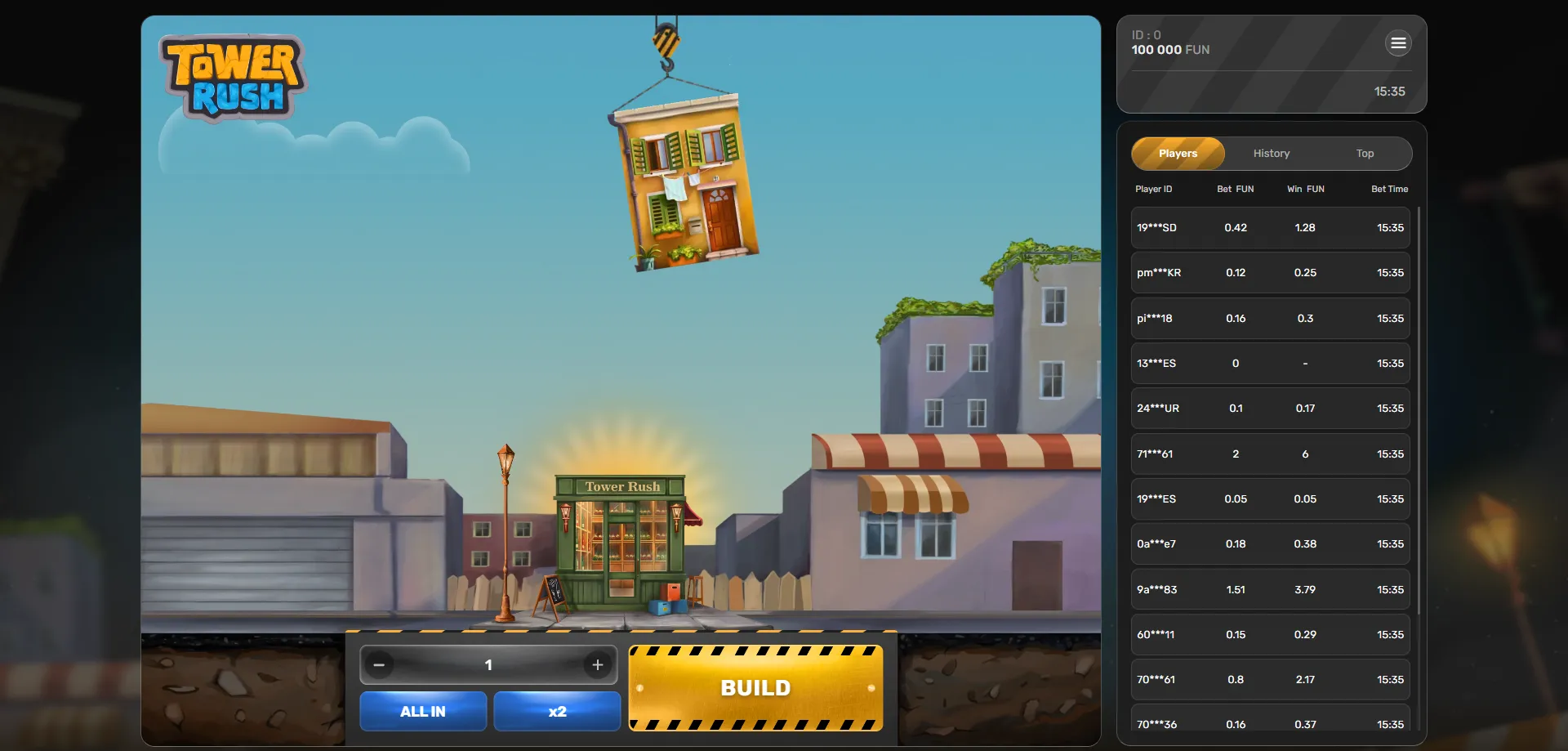
Tower Rush is a crash-format game developed by Galaxsys. Its core mechanic is simple: a multiplier climbs from 1× as a virtual tower builds upward, and you must cash out before it collapses. The round outcome is determined by a certified random number generator (RNG) and a provably fair algorithm, which means no external system can predict when the crash will occur. Every round is statistically independent of the one before it.
That said, "strategy" in this context does not mean finding a pattern in the RNG. It means managing your money, your timing decisions, and your behaviour in a way that reduces unnecessary losses and keeps you playing within rational limits. The game has a published RTP of approximately 97%, which is competitive — but high volatility means short sessions can deviate sharply from that theoretical return. Discipline bridges the gap between the math and your actual session results.
The honest answer: no strategy guarantees a profit. What strategy does is give your bankroll a structure so that a losing streak does not wipe you out before the variance has a chance to work in your favour.
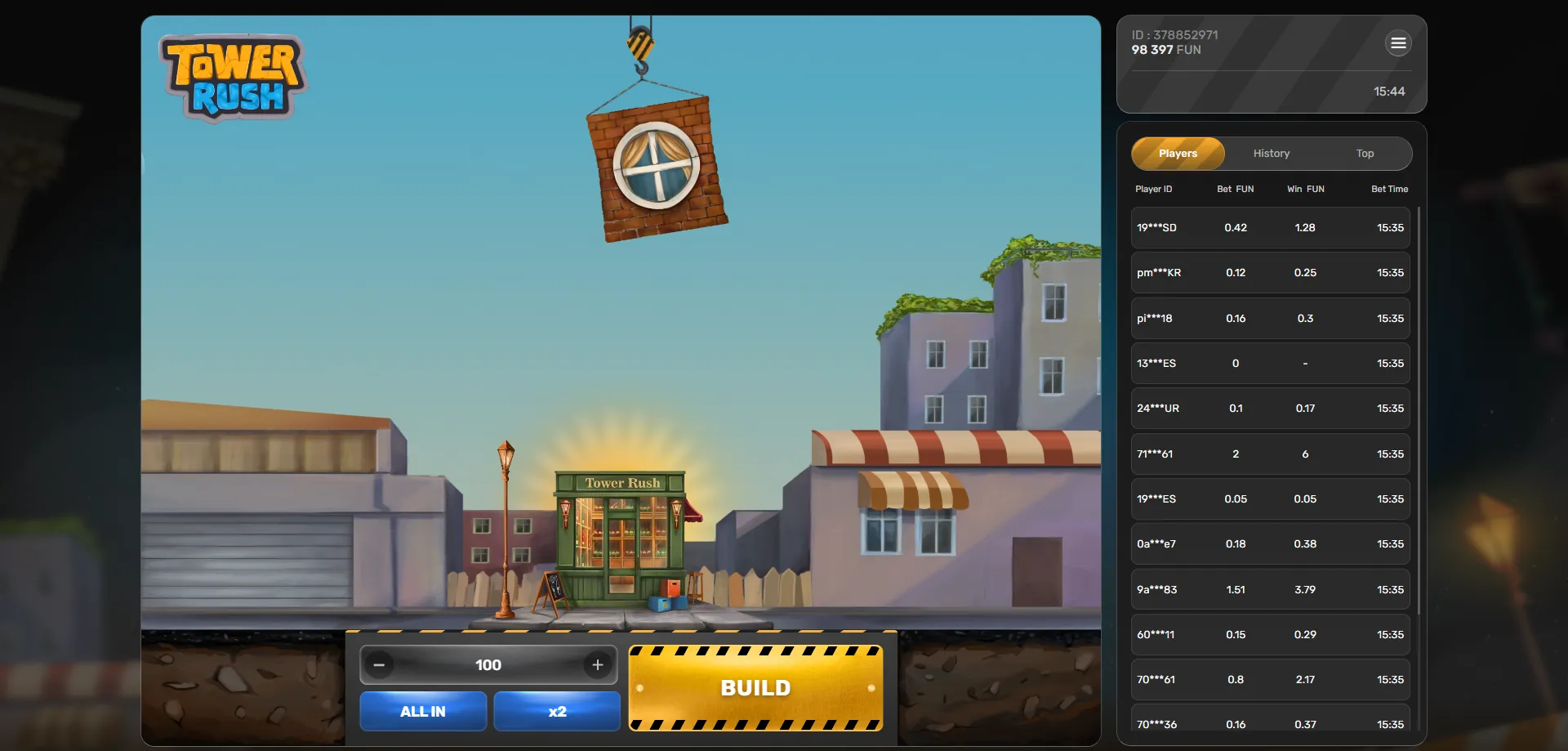
Tower Rush is classified as high volatility. That distinction matters practically: rounds can end at 1.01× just as easily as they can reach 20× or beyond. There is no fixed ceiling on the multiplier, and there is no minimum survival guarantee. The tower can collapse almost immediately after a round begins.
High volatility also means that a conservative approach — targeting low multipliers consistently — will produce many small wins but occasional losses that sting more than expected. A high-target approach — holding for 10× or above — will produce longer loss streaks punctuated by large payouts. Neither is inherently superior; the right risk level depends entirely on your session budget and your tolerance for a run of zero returns.
Three bonus floors (Frozen Floor, Temple Floor, and Triple Build) are triggered randomly by the RNG. The Frozen Floor mechanic in particular is popular among players because it provides a temporary safety feature, but it cannot be relied upon as a consistent cash-out safety net. Understanding that these features are random, not earned, is a foundational part of realistic risk assessment in Tower Rush.
Most players gravitate toward one of three broad approaches, and recognising which style fits your budget will save you from copying a strategy that suits someone else's bankroll, not yours.
Some players use a hybrid approach: place a small primary bet with an auto cash-out at 1.5×, and a separate smaller stake with a manual target of 10×. This is not a guaranteed hedge — both bets can lose — but it splits the session across two risk profiles simultaneously.
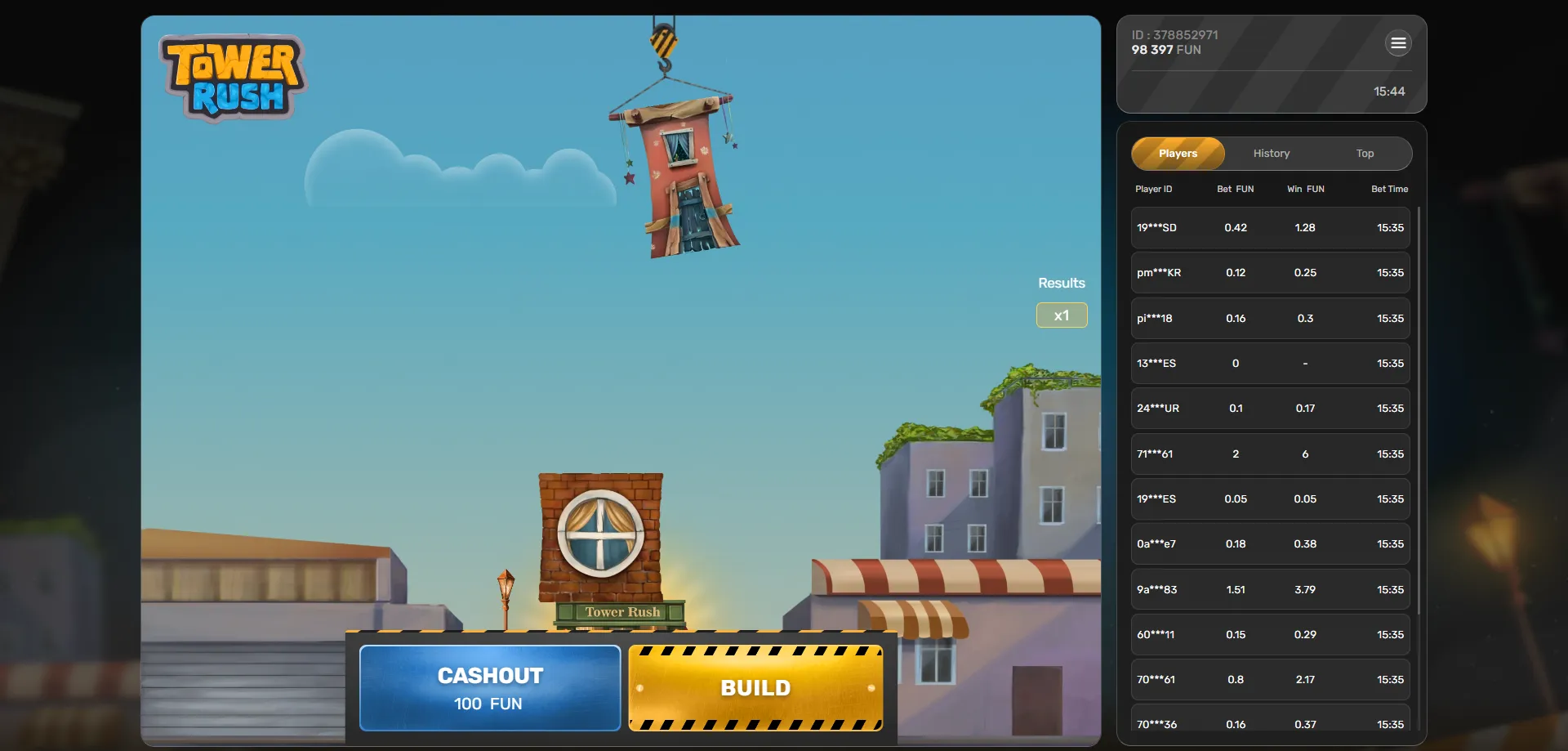
If you are new to Tower Rush game tricks and crash-format games in general, start with the auto cash-out feature. This removes the temptation to hold longer than planned when a round is going well. Set your auto cash-out at 1.5× or 2× before each round begins, and do not override it manually during play. The psychological pressure to "just hold one more second" is one of the most consistent causes of avoidable loss in crash games.
Here is a basic beginner framework that keeps exposure low while you learn the game's rhythm:
This is not glamorous. It will not produce a large win from a small stake. What it does is keep you in the game long enough to understand Tower Rush's volatility profile without depleting your balance in the first ten rounds.
Cash-out timing is the single most consequential decision in every Tower Rush round. There is no universally correct moment, but there are frameworks that help remove emotion from the decision.
Pre-set auto cash-out: The most disciplined approach. Before the round starts, enter your target multiplier into the auto cash-out field. The game executes it automatically if the tower reaches that level. You avoid hesitation entirely.
Fixed-target manual cash-out: Decide on a target — say, 2× — before the round begins, and commit to clicking the button at that point regardless of how the round looks at the time. The difficulty is sticking to the target when the multiplier is climbing past it and temptation to hold grows.
Trailing strategy: Some players set an initial target but allow themselves to raise it once if the round passes a milestone (for example, setting 2× as a floor but moving the target to 3× once 2× is reached). This is higher risk and requires genuine self-discipline to avoid becoming a habit of perpetual holding.
The honest warning: every second you hold above your planned target is unplanned risk. The RNG does not know or care that you are ahead. Rounds that feel like they "should" keep climbing end abruptly just as often as those that feel unstable. Plan your exit before the round starts, not during it.
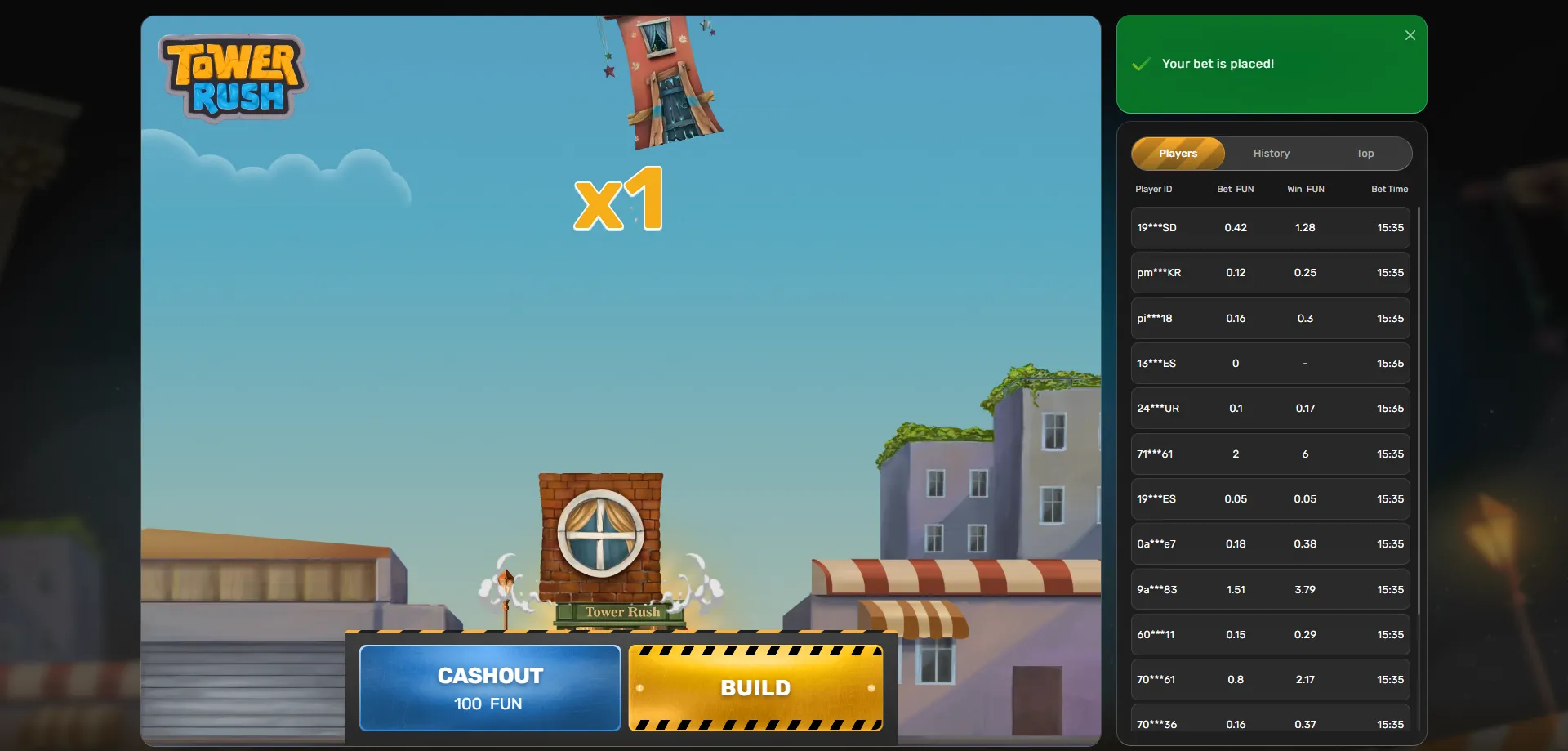
Tower Rush supports INR deposits at India-compatible casinos, with minimum stakes typically between ₹10 and ₹50 per round depending on the platform. This makes genuine session budgeting possible even at modest amounts.
A practical bankroll framework for Indian players:
Keeping a simple log of your sessions is one of the least glamorous and most effective tower rush game tricks available. You do not need sophisticated software — a basic spreadsheet or even a notes app works. Record the session date, starting balance, ending balance, approximate number of rounds, and your cash-out target for that session.
After ten or more sessions, patterns become visible. You may find that sessions where you used auto cash-out at 2× produced better net results than sessions where you held manually. You may find that your loss rate spikes on sessions where you increased stakes after losses. This data is specific to your behaviour, not to the game's RNG, and it is the only reliable basis for adjusting your approach.
Tower Rush's provably fair system allows you to verify individual round outcomes using session seeds after play. While this will not reveal a prediction pattern (the crash point is set before each round begins and cannot be influenced), it does confirm that results are genuinely random — useful peace of mind when a losing streak feels suspicious.
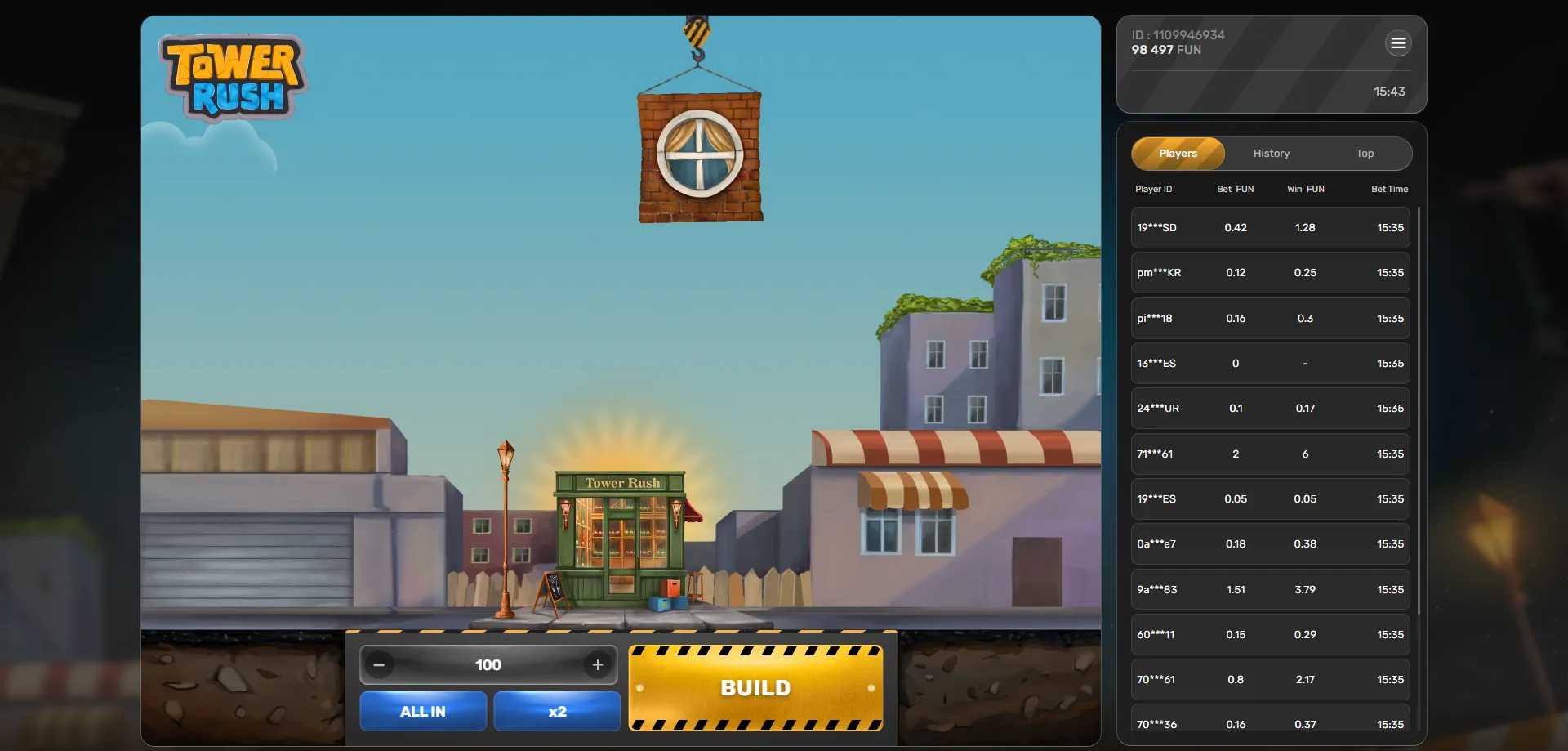
The Tower Rush demo replicates the full real-money experience using virtual credits, and it is available at a number of online casinos — some of which allow instant free play without registration. Treating demo mode as a testing environment rather than entertainment is what separates players who use it strategically from those who treat it as a warmup.
Concrete ways to use demo mode strategically:
One important caveat: demo mode does not replicate the psychological pressure of real-money play. The discipline required to stick to a cash-out target when actual money is at stake is meaningfully different from virtual credits. Use demo mode to learn mechanics and test frameworks — but understand that real-money sessions will test your self-control in ways demo mode cannot fully simulate.
Tower Rush rounds complete in seconds. That speed compresses the emotional cycle of a win or loss into a timeframe that makes rational recalibration difficult. Tilt — the state of making increasingly poor decisions in response to losses — occurs faster in crash games than in almost any other casino format precisely because the feedback loop is so rapid.
Practical emotional controls that experienced players use:
Several recurring errors appear across crash game players, and Tower Rush is no exception. Recognising these mistakes before you make them is more useful than diagnosing them afterwards.
The direct answer is: yes, but only within specific limits. Strategy cannot alter the RNG, change the game's RTP, or guarantee a winning session. What it can do is reduce unnecessary losses caused by behaviour — tilt, poor stake sizing, undisciplined cash-out decisions — which are the causes of loss that are actually within your control.
Over a long sample of sessions, a player who uses consistent stake sizing, pre-set auto cash-outs, and strict session limits will retain more of their bankroll than a player with equivalent luck but no structure. The 97% RTP means the house edge is approximately 3% — that is the unavoidable mathematical cost of every rupee wagered. Strategy does not reduce that edge. It does reduce the amplifying effect of poor decisions layered on top of it.
Players who want to explore Tower Rush's mechanics and volatility in more depth can find detailed information in our How to Play Tower Rush game guide and our analysis of Tower Rush RTP and volatility, which breaks down what the 97% figure means for real session planning.
Tower Rush is a fast, transparent, and genuinely engaging crash game with a 97% RTP and a provably fair system. No strategy will override the RNG or guarantee profit — anyone telling you otherwise is selling something. What the approaches covered here can do is give your session a rational structure: controlled stake sizing, disciplined cash-out targets, demo-mode testing before real money, and emotional guardrails that prevent one bad run from becoming a catastrophic one. Apply them consistently, and the 3% house edge remains the only structural disadvantage you are working against.
Register an account today at ugwapk.com and get an exclusive bonus boost to start your climb to the top of the Tower Rush leaderboard!
🚀 Play Tower Rush🔒 18+ · T&C Apply · Play Responsibly